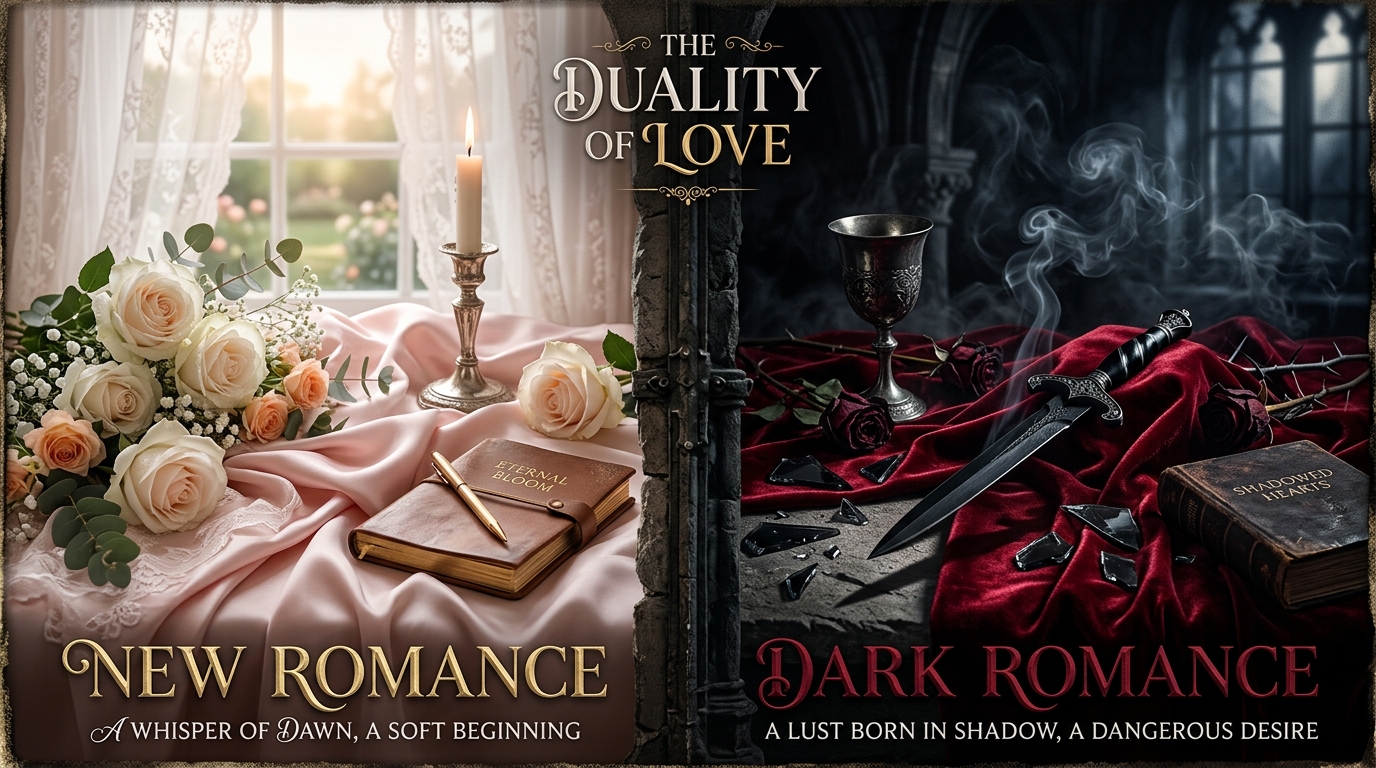

Every week across author messages and writer forums, the same question is asked by passionate readers and aspiring novelists: “How do you write a dark romance novel that hooks readers from chapter one to the final page without falling into tired clichés?”
Writing dark romance is a high-wire literary act. It is not enough to drop in a few weapons, tattoos, and commanding growls. Authentic dark romance demands precision pacing, sharp psychological insight, and a delicate balance of danger and devotion.
As an author of bestselling dark sagas—from the campus power duels of Cruel Accords to the mafia reverse harem of Three Shadows on My Skin—I invite you behind the scenes of my writing workshop.
Here is your practical, step-by-step masterclass on crafting and publishing your own Dark Romance.
1. The Golden Rule: Honor the Romance Contract & Guaranteed HEA
Before drafting a single line of razor-sharp dialogue, etch this foundational truth into your mind: Dark Romance is, first and foremost, a romance.
Many beginner writers make the fatal mistake of writing a bleak psychological tragedy under the romance label. The sacred covenant with the reader demands:
- No matter how harrowing the trials,
- No matter the brutality of outside syndicates or past trauma,
- The story MUST conclude with a hard-won Happily Ever After (HEA) or Happy For Now (HFN).
If the heroine dies alone or the anti-hero permanently breaks her spirit without love and mutual surrender, the book is a dark thriller, not a romance. Dark romance is the story of a love that conquers the deepest darkness.
2. Architecting an Unforgettable Morally Grey Anti-Hero
The anti-hero is the narrative engine of your book. To ensure he captivates rather than repulses, build his moral compass on three pillars:
                  THE MORALLY GREY ANTI-HERO TRIANGLE

                     [UNBREAKABLE CODE OF HONOR]
                     (Merciless toward his enemies,
                      incapable of betraying his word)
                                  /\
                                 /  \
                                /    \
                               /      \
      [AN INTROSPECTIVE WOUND] ────── [THE PROTECTIVE PROTOCOL]
      (Childhood trauma, secret       ("Touch Her and Die",
sacrifice, fear of loss) absolute devotion to her)- The Trap to Avoid: The petty, sadistic bully. A male lead who insults or abuses the heroine without compelling dramatic purpose turns readers away instantly.
- The Secret to Magnetism: The anti-hero is ruthlessly lethal to the outside world, but his armor fractures exclusively when he is alone in her presence.
3. The Heroine: The Unbreakable Spine of the Story
The most fatal misstep in dark romance is writing a passive damsel who waits to be rescued or forgives cruelty without a fight.
To make your heroine unforgettable:
- Give Her Agency & Steel: Whether trapped in an isolated estate or forced into a campus contract like Elena Vance in Cruel Accords, she fights back using her own weapons: tactical intellect, verbal venom, and sheer dignity.
- Growth Through Resilience: She doesn’t need to become a monster to survive; it is her moral resilience that brings the dangerous anti-hero to his knees.
4. The 5-Act Narrative Arc of Dark Romance
To maintain relentless suspense and eliminate the dreaded “sagging middle”, structure your manuscript along this proven curve:
                  THE DARK ROMANCE TENSION CURVE

  Tension
    ▲                                                     [Resolution & HEA]
    │                                                    /
    │                                      [Final Climax]
    │                          [Betrayal /       │
    │                       Shocking Reveal]     │
    │                             /\             │
    │                [Slow-Burn  /  \            │
    │                 Intimacy] /    \           │
    │                     │    /      \          │
    │     [Collision &    │   /        \─────────┘
    │      Initial Spark] │  /
    │            │        │ /
    └────────────┴────────┴────────────────────────────────────────► Time
ACT 1 ACT 2 ACT 3 ACT 4 ACT 5- Act 1: The Collision of Worlds: High-tension meeting, breach of ordinary civil boundaries, irreversible descent into danger.
- Act 2: Captivity & Resistance (Slow Burn): Psychological chess match, sharp banter, mounting forbidden desire.
- Act 3: The Turning Point & Intimacy: External crisis forces a shared alliance. First explosive, uncensored intimacy.
- Act 4: The Major Crisis (The Dark Moment): Betrayal or forced separation. The sacrifice that threatens to tear them apart forever.
- Act 5: Final Showdown & Hard-Won HEA: Eradication of the true enemy, vulnerable confession, and an unbreakable bond sealed for life.
5. Beginner Pitfalls vs. Mastercraft Techniques
| Beginner Mistake | Mastercrafted Professional Instinct |
|---|---|
| Instant forgiveness after the first kiss | Slow, earned trust demonstrated through concrete actions |
| Gratuitous spice with zero emotional stakes | Intimacy that irreversibly shifts the power dynamic |
| Invulnerable anti-hero with no vulnerabilities | Damaged alpha tormented by past failure or terror of losing her |
| No content advisories | Transparent Trigger Warnings on the opening page |
| Verbose, rambling monologues | Clipped dialogue, heavy pregnant pauses, and loaded glances |
6. Author Ethics: Crafting Your Content Disclosures
Never skip your Trigger Warnings: they protect your readers’ emotional safety and establish professional trust.
On page one of your manuscript, include a clear disclosure box:
- Specify Age Rating: “This novel is strictly intended for mature adult readers aged 18 and older.”
- Itemize Sensitive Themes: Firearms, syndicate captivity, explicit adult erotica, grief, psychological tension. (See our Trigger Warning guide).
- Affirm the Fictional Context: Remind readers that behaviors depicted are transgressive fantasy and do not represent healthy real-world relationship standards.
Dare to Explore the Shadows
Writing dark romance requires bravery: the courage to explore taboo psychology, delve into the depths of human desire, and unapologetically claim your creative voice.
Do not try to copy what is trending this week. Find your voice, your distinct passions, and your signature tropes.
To see these mechanics in action, dive into Cruel Accords — Volume 1: Entrapment on Kindle Unlimited. Happy writing!