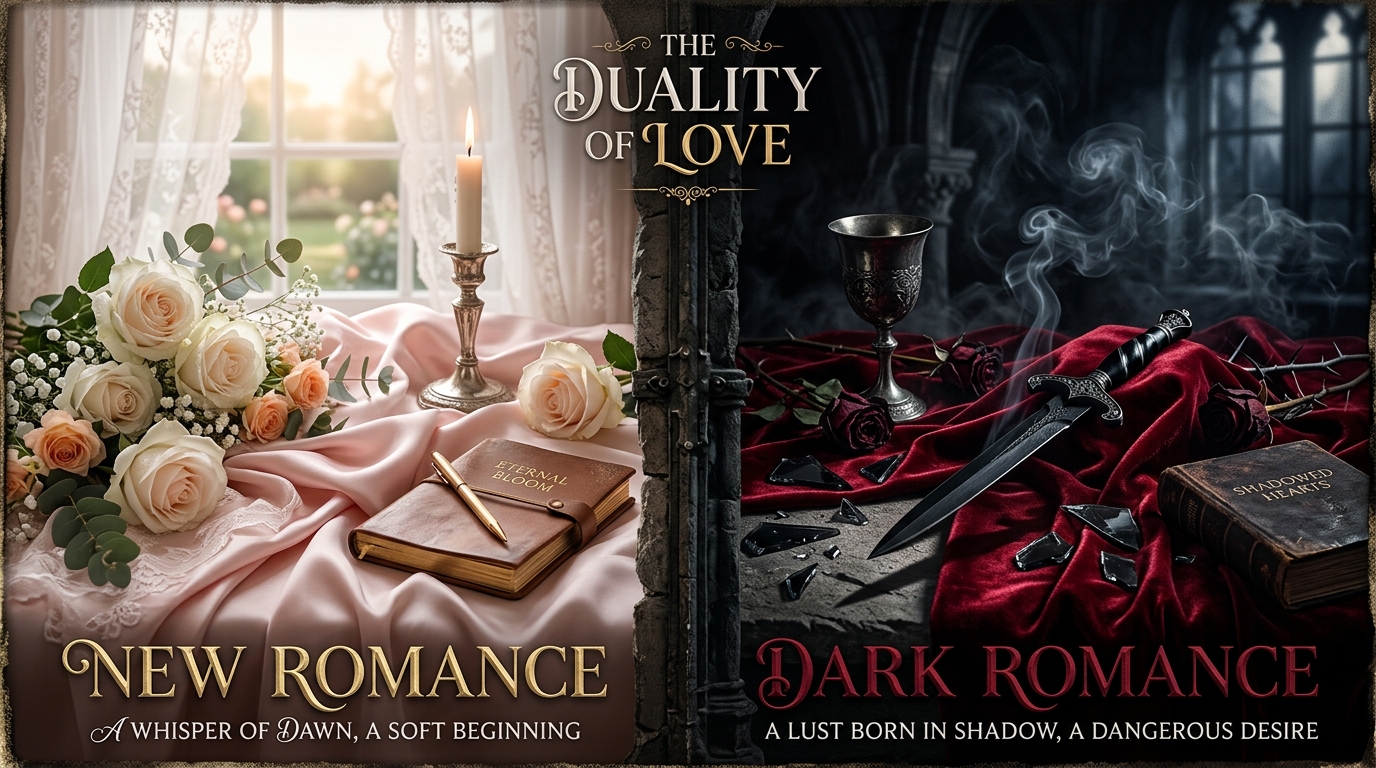
In bookstore displays and across the buzzing feeds of #BookTok, contemporary romance has taken center stage. With millions of passionate readers, the genre has expanded into a multitude of subgenres and emotional registers. Yet beneath gilded covers and sprayed edges lie literary worlds that could not be more different.
Between New Romance (often associated with New Adult) and intoxicating Dark Romance, the line can seem blurry for newcomers.
How often do readers wonder: “Are After or Fifty Shades of Grey dark romance?”, “Is dark romance just regular romance with more sex?”, or “What should I expect before reading my first dark novel?”
The answer is definitive: New Romance and Dark Romance operate under different moral contracts, psychological dynamics, and reader expectations. While New Romance centers on emotional resilience, communication, and healing within everyday society, Dark Romance deliberately crosses into forbidden territory, testing moral boundaries and exploring raw survival.
Here is your comprehensive guide comparing these two powerhouse romance genres.
1. What is New Romance? Healing and Everyday Reality
Emerging in the early 2010s in the wake of Young Adult fiction to accompany readers into their twenties, New Romance is rooted in the relatable challenges of modern life.
Typical settings revolve around major life transitions: college campuses, first apartments, high-pressure city careers, heartbreak, family conflict, and personal discovery.
The 4 Pillars of New Romance
- Grounded, contemporary realism: The heroine faces challenges any reader recognizes: career burnout, imposter syndrome, grief, or financial strain.
- Flawed but fundamentally ethical heroes: Even if the male lead wears a protective mask of arrogance, athlete bravado, or cold corporate success, his actions never violate basic human rights or criminal law.
- Healing as the narrative motor: Love serves as an engine for self-realization and mutual healing. It enables characters to communicate, process past wounds, and build healthy partnerships.
- Unconditional respect for consent: Even during fierce arguments or awkward intimate moments, explicit mutual consent remains the story’s baseline.
Authors like Colleen Hoover or sports romance writers exemplify this category: emotions run high, tears flow over realistic drama, but the moral compass stays within socially accepted norms.
2. What is Dark Romance? Unapologetic Exploration of the Forbidden
In stark contrast to New Romance, Dark Romance is an extreme, transgressive subgenre crafted specifically to step outside conventional morality. Here, love does not blossom in sunshine: it ignites amidst blood feuds, criminal syndicates, coercive contracts, and high-stakes captivity.
The Defining Codes of Dark Romance
- Morally Grey Protagonists: The hero is neither a charming prince nor a misunderstood sweetheart. He is a mafia boss, elite operative, or ruthless billionaire who commands his empire through fear. Learn more in our guide on why morally grey heroes fascinate us.
- Deliberately Pushing Boundaries: Financial leverage, arranged alliances, severe power asymmetry, and psychological warfare drive the plot.
- Fierce, Possessive Protection: The male lead does not negotiate his feelings: he claims his partner, destroys rivals, and punishes anyone who threatens her. Explore this in our breakdown of the Touch Her And Die trope.
- Mandatory Trigger Warnings: Because themes are intense, dark romance is strictly 18+. Reviewing Trigger Warnings in Dark Romance is essential before reading.
3. Side-by-Side Comparison: 8 Key Differences
┌────────────────────────┬─────────────────────────┬─────────────────────────┐
│ Criteria               │ New Romance (New Adult) │ Dark Romance            │
├────────────────────────┼─────────────────────────┼─────────────────────────┤
│ Setting & Atmosphere   │ Campus, shared flats,   │ Crime syndicates,       │
│                        │ corporate offices       │ isolated estates        │
│ Hero Profile           │ Flawed, good at heart,  │ Morally grey or black,  │
│                        │ sports star, CEO        │ ruthless predator       │
│ Dynamic                │ Friends to lovers,      │ High-stakes Enemies to  │
│                        │ light banter            │ Lovers, forced captivity│
│ Consent Dynamics       │ Explicit, continuous    │ Dubious consent,        │
│                        │ verbal communication    │ intense power struggle  │
│ Relationship Goal      │ Mutual healing and      │ Shared reign, sacred    │
│                        │ healthy partnership     │ pact in the shadows     │
│ Spice Level            │ Mild to high (2-3 🌶️)   │ Very high (3-5 🌶️),    │
│                        │ tender & sensual        │ raw, kinky, dirty talk  │
│ Content Warnings       │ Rare or light           │ Mandatory, explicit     │
│ Target Audience        │ 16+ to adult            │ Strictly 18+ adults     │
└────────────────────────┴─────────────────────────┴─────────────────────────┘
4. Consent and Morality: The True Dividing Line
The essential difference between these genres lies in how they handle consent and moral boundaries:
- New Romance reflects real-world ideals: Toxic behaviors are highlighted as issues to be addressed and corrected. The narrative guides characters toward healthy communication, accountability, and mutual respect.
- Dark Romance provides a safe, cathartic fantasy space: The story makes no claim to serve as relationship guidance. It functions as an emotional sandbox where adult readers safely explore taboos, total surrender, and high-danger fiction without any real-world risk.
“New Romance is a warm haven that soothes real-world wounds; Dark Romance is a dance with the shadows where we taste the thrill of danger without ever risking real harm.” — Zaria Vane
5. Ready to Cross the Threshold?
If you are transitioning from New Romance into Dark Romance, begin with Cruel Accords — Volume 1: Under His Rule. It delivers high-stakes enemies-to-lovers tension, electric chemistry, and sharp dialogue in the glittering heights of New York finance.
Join the Zaria Vane VIP Club to stay informed on future translations and novel releases!